Survey of ASEAN Peoples’ Perceptions on China, India, Japan, and the USA.

ASEAN’s led regional mechanism would not be effective and impactful without the support of its strategic partners, including the US, China, Japan, and India. Although the strategic significance of these strategic partners are well-recognized, Southeast Asians’ perceptions on the US, China, Japan and India are often not known. In 2023, FPCI, in collaboration with the Economic Research Institute for ASEAN and East Asia (ERIA), conducted a regional survey titled “Survey of ASEAN Peoples’ Perceptions on China, India, Japan, and the USA.” The survey successfully gathered responses from 1,722 participants spanning all ASEAN member countries, including Timor-Leste. To dive deeper into the survey’s results, FPCI convened a “Public Debrief: Survey of ASEAN Peoples’ Perceptions on China, India, Japan, and USA.” This public debriefing explored the significance of these perceptions, discussed why they matter and uncovered further geopolitical insights that may arise from the survey findings.


Transforming Ideas into Impact: How Individuals and Civil Society Groups Can Drive Meaningful Changes?

In today’s rapidly evolving technological and geopolitical landscape, the capacity for individuals and civil society groups to affect meaningful change has expanded beyond traditional government channels. While governments from the U.S. to China, and from the Global North to the Global South still play a crucial role, the democratization of information and communication tools has empowered ordinary people and grassroots organizations to contribute to societal progress in unprecedented ways. Good ideas can come from anywhere. However, transforming individual ideas into tangible changes requires strategic planning, collaboration, compromise, and sustained effort. Building alliances with like-minded individuals and organizations can amplify impact and create momentum for change. Fostering a culture of civic engagement and participatory democracy, therefore, is essential for ensuring that individual ideas translate into concrete actions and lasting improvements in society. In short, the world urgently awaits the age of the citizen policy entrepreneur. Against this backdrop, Foreign Policy Community of Indonesia convened a Global Town Hall series on “Transforming Ideas into Impact: How Individuals and Civil Society Groups Can Drive Meaningful Changes?” where we looked into how individuals as well as civil society groups can initiate and enact changes that are not just impactful, but also long-lasting.


Eyes on Saudi Arabia: How a Pivotal Middle Power is Raising Its Strategic Game

In the Middle East, Saudi Arabia has been seen as one of important players in global affairs for its increasing presence and influence on the regional and global stage over the past years. To dive deeper into Saudi Arabia’s foreign policy development, FPCI Middle Power Studies Network (MPSN) convened a public discussion titled “Eyes on Saudi Arabia: How a Pivotal Middle Power is Raising Its Strategic Game.


FPCI-GRIPS Virtual Public Forum Indonesia and the Organisation for Economic Co-operation and Development (OECD) Membership: Weighing the Political-Economic Implications

On Tuesday, 30 January 2024, FPCI-GRIPS hosted a virtual public forum with the topic “Indonesia and OECD Membership: Weighing the Political-Economic Implications”, organized by Foreign Policy Community of Indonesia and the National Graduate Institute for Policy Studies (GRIPS) of Japan, and this is the fourth forum of this year’s FPCI-GRIPS Virtual Public Forum series. The distinguished speakers included Dr. Muhammad Hadianto, Deputy Director/Lead Coordinator for Multilateral Cooperation on Economy, Finance, and International Financial Institution Coordinating Ministry for Economic Affairs, Republic of Indonesia, Amb. Yoshifumi Okamura, Vice President of Ritsumeikan Asia Pacific University and Former Ambassador and Permanent Representative of Japan to the OECD, and Shinta Kamdani, Chairman of Indonesian Employers Association (APINDO) and moderated by Lusia Novita Sari, FPCI Women in Foreign Policy Fellow.


FPCI-GRIPS Virtual Public Forum Indonesia and OECD Membership: Weighing the Political-Economic Implications

In July 2023, Indonesia officially announced its interest in joining the Organisation for Economic Co-operation and Development (OECD), an international organization established by the European nations in 1961. Approaching the end of 2023, a letter of intention from Indonesia has been submitted to the OECD Secretary-General and is currently waiting for formal proceedings of the steps forward by the OECD. Indonesia has been a key partner of the OECD and has worked closely together since 2007, along with Brazil, China, and South Africa. Should Indonesia join the OECD, it will be the third Asian country member after Japan and South Korea. Against this backdrop, Foreign Policy Community of Indonesia (FPCI) and the National Graduate Institute for Policy Studies (GRIPS) convened a virtual public discussion on “Indonesia and OECD Membership: Weighing the Political-Economic Implications.”


1000 Abrahamic Circles Public Discussion – “Minority-to-Majority Dialogue: Assisting a receiver for the minority’s messages”

A respectful and friendly relationship between minority and majority groups are essential to reach a world of peace and harmony. But how do we maintain a good relationship between the majority and minority and make sure that minorities’ rights are being valued in the world?

https://www.1000circles.com/post/minority-to-majority-dialogue-assisting-a-receiver-for-the-minority-s-messages

https://docs.google.com/document/d/1po5NLZAq0FKZUsUNVZdzapdfvA46L-idj67R0nRi3FY/edit?usp=sharing

Think Tank Dinner

FPCI hosted a Think Tank Dinner to connect, update, and discuss among think tanks based in Jakarta issues as well as their plans for the year 2023. The meeting was held closed-door, in a small group, at the same table. More than 20 think tanks were represented in that first Think Tank Dinner.

FPCI Public Discussion: Event on One Year Russia’s Invasion of Ukraine”

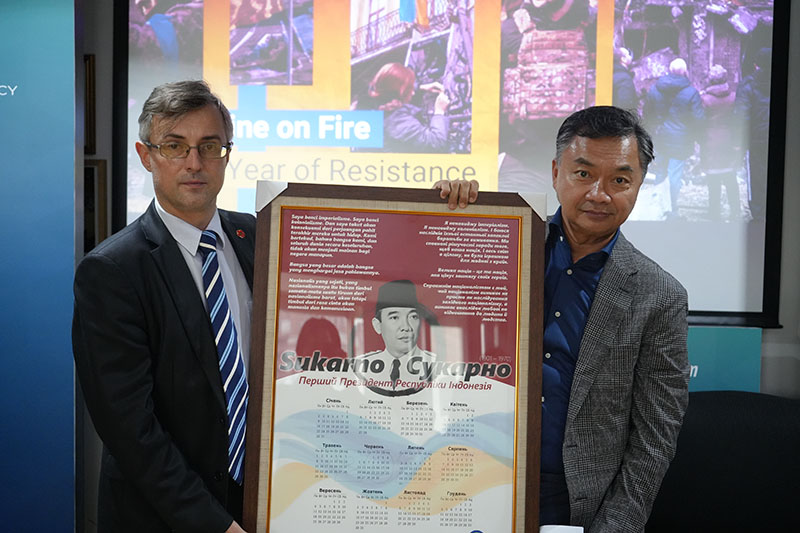
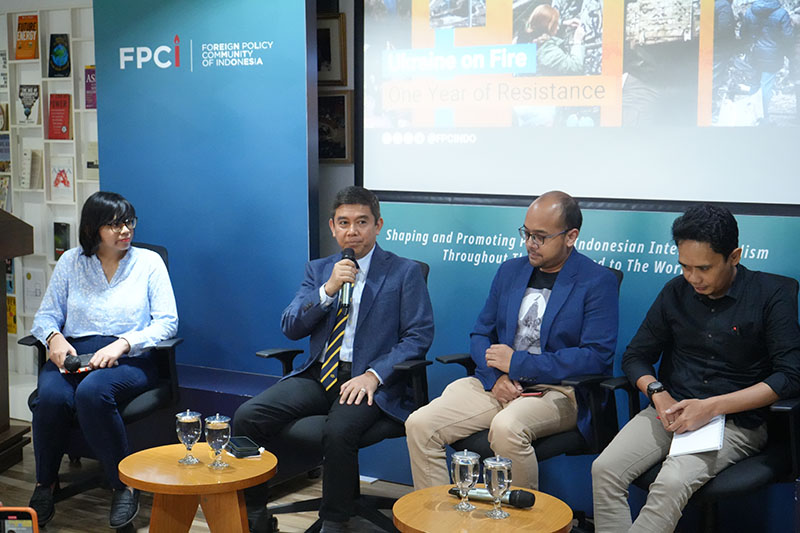
In February 2023, marking one year of the war in Ukraine, FPCI organized a public forum titled “Ukraine on Fire: One Year of Resistance.” This event brought together prominent figures and experts to discuss the ongoing war in Ukraine. The forum began with opening remarks from H.E. Vasyl Hamianin, Ambassador of Ukraine to Indonesia, and Dr. Dino Patti Djalal, Founder and Chairman of FPCI. The panel discussion featured:

Speakers: 1. Prof. Yuddy Chrisnandi, Ambassador of Indonesia to Ukraine (2017-2021); 2. Radityo Dharmaputra, FPCI Fellow & Lecturer of International Relations at Universitas Airlangga; and 3. Kris Mada, Journalist at KOMPAS, who covered the war in Ukraine in 2022

Moderator: Dini Putri Saraswati, Lecturer of International Relations at Universitas Pembangunan Nasional Veteran Jakarta The forum was held in-person at Bengkel Diplomasi, FPCI Secretariat, Jakarta, Indoensia.

A recording of the event is available at Youtube: https://www.youtube.com/live/wcYdXZ4abrY

FPCI Public Discussion: “Indonesian Climate Policy Outlook”

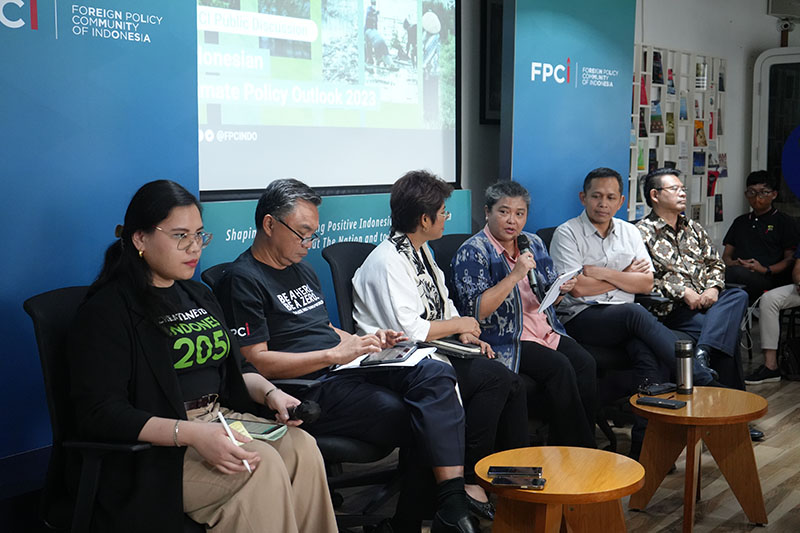
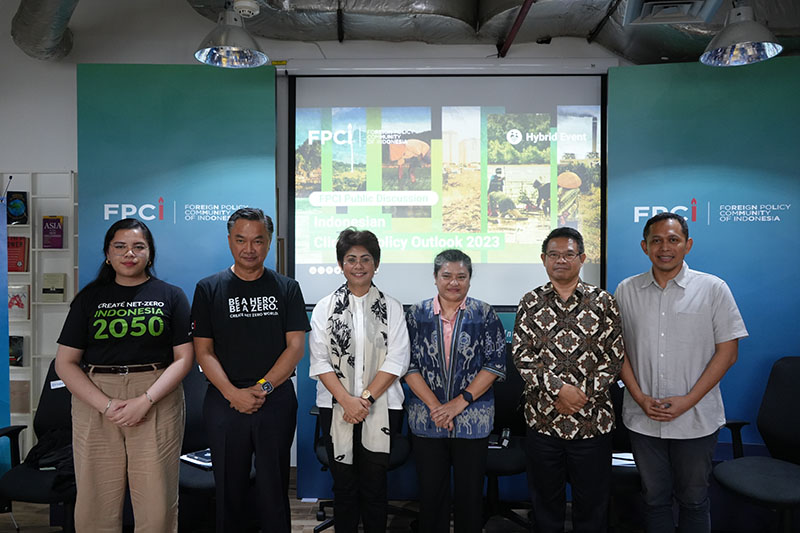
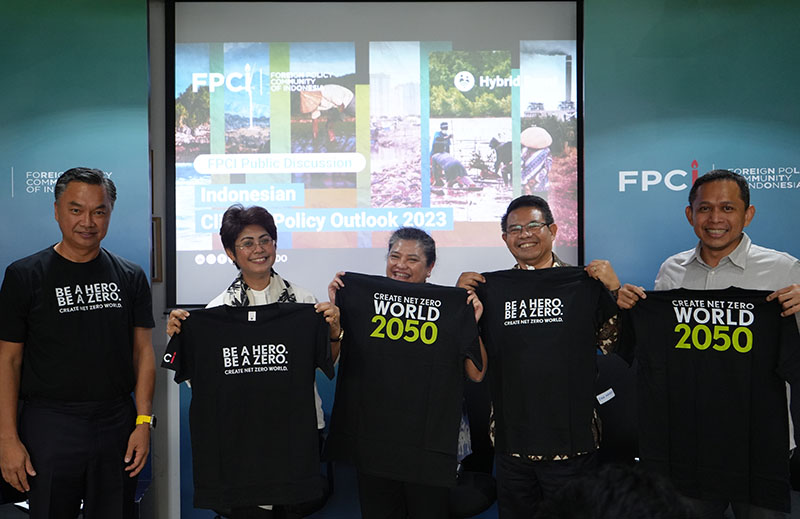
In this public discussion the audience gained exposure to the analyses, perspectives, and ideas of Indonesian policymakers and climate experts regarding priority issues and the direction of Indonesia’s climate policy this year, and the challenges ahead. Speakers: Dr. Dino Patti Djalal, Arief Wijaya and Kuki Soejachmoen. Moderator: Esther Tamara